
Hi, it’s me. I came here to romanticize my morning coffee and somehow ended up writing my first blog post back about oil markets and international drama. Bet you didn’t see that coming. I didn’t either.
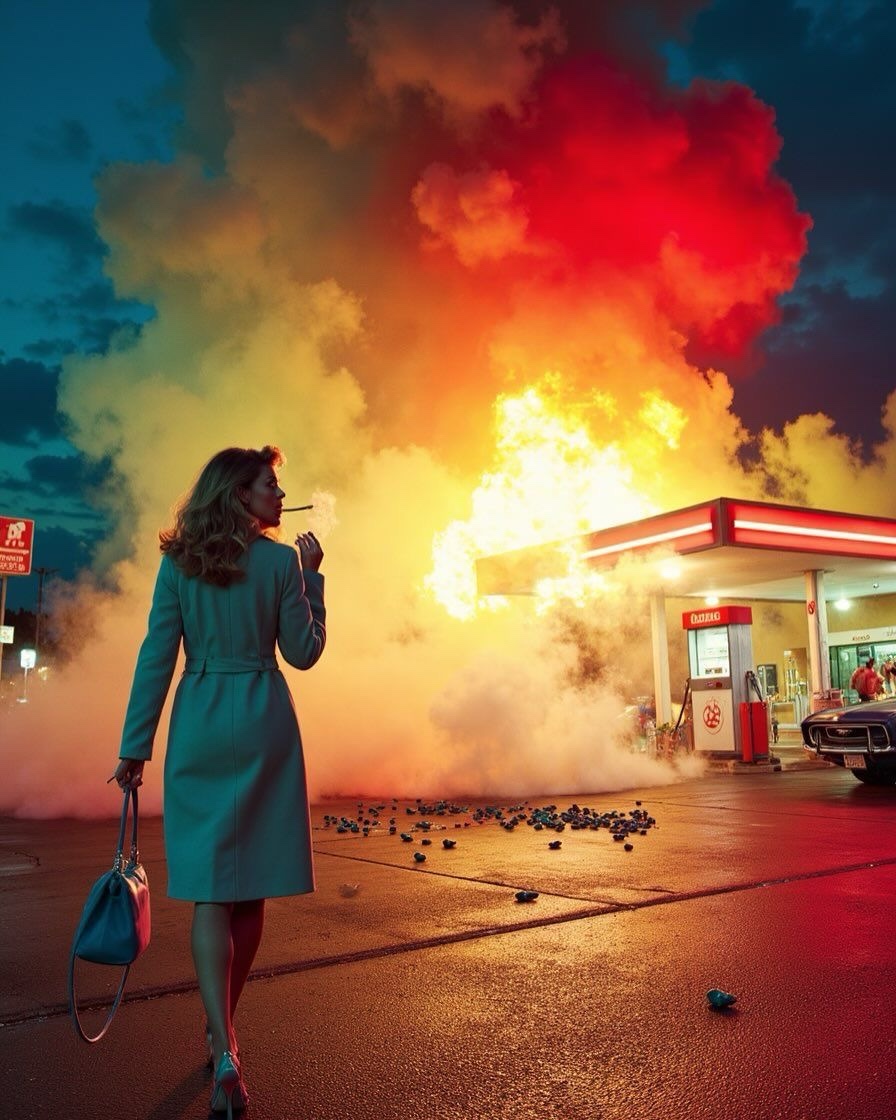
Which honestly feels on brand, because if there’s one thing I apparently love, it’s a good situationship. And right now, that situationship is with the gas pump.
You know the kind. The one that shows up when you need it, treats you well for a minute, makes you feel like maybe life is finally cutting you a break, and then disappears emotionally the second you start building expectations. That’s cheap gas. We are absolutely in our “this feels amazing, but I don’t trust you” era.
Because there is something universally joyful about pulling up to the pump and seeing a lower number than you expected. It feels like finding an extra twenty in your coat pocket. Like the universe looked at inflation and said, “I got you.” And honestly, in a season where everything feels expensive, that relief matters. Lower energy prices help families. They ease pressure on groceries, travel, childcare, and all the quiet costs that sneak into everyday life. That part is real. It deserves to be celebrated.
But in oil and gas, two things can be true at the same time. A price drop can feel like a win for consumers today and still be a warning sign for the system tomorrow.
Because this industry does not run on vibes.
It runs on continuity.
What we are seeing in the market right now is not a sudden wave of new supply. It is not Venezuelan barrels quietly slipping into refineries overnight. It is the market reacting to expectation, not execution. It is hope being priced in. It is a trade reaction, not a production shift.
Which is exactly why this feels like a situationship. We are falling in love with the idea of cheap gas before the reality of stable supply exists. We are texting first. We are imagining a future. We are building a Pinterest board. And the market is like, “Let’s not put labels on this yet.”
In commodities, there is always a lag between sentiment and fundamentals. Prices move in minutes. Barrels move in months. Drilling programs, export agreements, shipping logistics, refinery adjustments, workforce mobilization. None of that happens on a news cycle. So when prices drop sharply in a short window, that move almost always reflects probability, not production. And probability is powerful, but it is not the same thing as reality.
Underneath the optimism, the industry still behaves exactly the way it always does when uncertainty rises. Capital tightens. Expansion slows. Drilling becomes more disciplined.
And yes, rig activity in the U.S. has been trending downward over the past several months.
That does not mean collapse.
It means restraint.
And restraint makes sense, but restraint also has consequences. Oil and gas is a long-cycle business. What we choose not to do today shows up in supply a year or two from now.
This is the part people outside the industry rarely see.
When production slows or becomes more expensive, the impact is not abstract. It is personal. It shows up in the communities where oil and gas is not just an industry, but an identity. Towns where drilling decisions affect whether small businesses survive, whether schools stay funded, whether families stay or leave. Markets adjust in seconds. Communities adjust over generations.
And here is where it helps to zoom out, because not all oil is the same.
Not all barrels behave the same.
And not all crude fits into the same parts of the system.
Crude oil is usually described two ways, how heavy it is and how sour it is. Light versus heavy is about density. Sweet versus sour is about sulfur content.
Light, sweet crude is easier and cheaper to refine. Heavy, sour crude takes more equipment, more processing, and more cost.
That matters because refineries are not one size fits all. Some refineries in the U.S. are specifically built to handle heavy, sour crude like what comes out of places such as Venezuela. Others are optimized for lighter shale production from here at home. You cannot just swap one barrel for another and expect the system to behave the same way.
It is like saying all coffee is coffee. Sure, but espresso beans and cold brew beans are not doing the same job.
So when markets react to the idea of Venezuelan barrels, what they are really reacting to is this: Certain refineries might eventually have access to crude that better fits their configuration. That could help margins. That could help product supply. That could help prices.
But that is a theory first.
A logistics problem second.
and a reality much later.
Because before those barrels ever matter, a lot has to happen. Fields have to be producing. Infrastructure has to be reliable. Shipping lanes have to be clear. Contracts, insurance, and financing have to fall into place. That is why what we are seeing now is not a production story. It is a market expectation story. And expectations are powerful, but they are not the same thing as supply.
This is why cheap gas feels like a situationship. Because we are falling in love with the idea of stability before the system can actually deliver it.
We are enjoying the good texts. We are romanticizing the moments. But we have not met the family yet. We have not talked about long-term plans. We have not seen how it behaves under pressure.
In oil and gas, the long-term relationship is built on fundamentals. On drilling programs that do not stop and start with every headline. On infrastructure that takes years to build and decades to maintain. On communities that depend on predictability, not surprise.
Short-term price relief is the fun part of the relationship. Long-term supply stability is the commitment. And confusing the two is how we end up heartbroken later, in markets and in real life.
And here is where this starts to feel bigger than just energy. Because the truth is, this is not just how markets behave. It is how people behave too. We are wired to love the high and fear the low. We celebrate sudden relief and panic at sudden pain.
We chase big moments and overlook quiet consistency. But when you really look at what makes a life feel safe, grounded, and joyful, it is almost never the extremes.
It is the middle.
The steady.
The predictable rhythm that lets you plan, breathe, and build something lasting.
That is true in relationships. It is true in careers. And it is true in energy.
Just like human nature, oil and gas does not thrive in chaos. It thrives in stability. And what we are seeing right now is not stability. It is a swing. It is a reaction. It is hope being traded faster than reality can catch up. And swings might feel exciting, but they are not where trust is built. They are not where families make long-term plans. They are not where communities grow strong roots. Stability is quieter than a headline, but it is louder than any spike when it comes to what really matters.
And then there is the idea we all reach for when complexity feels uncomfortable. We will just switch to something else. I love optimism. Truly. But I also love honesty.
Crude oil is not just fuel. It is a foundational input into modern life. It touches transportation, healthcare, agriculture, construction, technology, packaging, textiles, and the infrastructure that keeps everything moving. It is in the syringes that deliver medicine. The fertilizer that grows food. The asphalt under highways. The materials that make phones, laptops, and even renewable technologies possible.
Transitions matter. Innovation matters. But you do not replace a system that deep overnight without consequences. You evolve it carefully, with planning, with stability, with continuity. That is why oil and gas cannot survive on boom-and-bust thinking. It requires rhythm. Predictable investment. A workforce that can plan a life. Infrastructure built for tomorrow, not just today.
Here is what history shows us, again and again.
Prices fall.
Producers pull back.
Investment tightens.
Everyone enjoys the relief.
Then time passes. Demand stays. The barrels we did not produce are suddenly needed. Infrastructure cannot ramp fast enough. Supply tightens. And prices do not rise gently. They spike.
Which is why cheap gas is not a forever relationship. It is a situationship. Fun while it lasts. Stressful if you build your future on it.
So maybe this whole thing is not really about gas prices at all. Maybe it is about learning when to enjoy a moment without building a future on it.
We can celebrate the wins and still stay curious. We can feel the relief and still ask better questions.
We can hold joy in one hand and awareness in the other.
Because real stability, in life and in energy, is not about chasing the high or fearing the low. It is about understanding the rhythm underneath it all. And if this season is teaching me anything, it is this. The most magical moments are not the spikes. They are the steady places that let us breathe, build, and believe in what lasts.
 Difficult & Expensive
Leave a comment